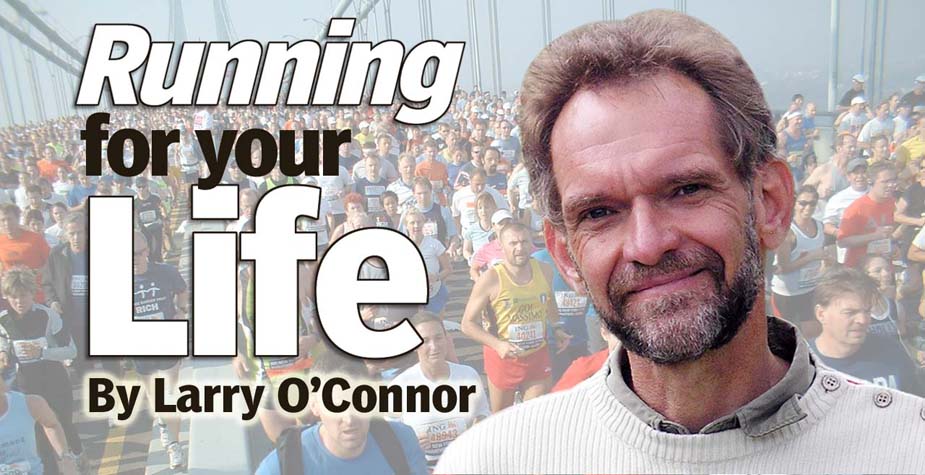
Running for Your Life: Jamaican Mood

Grilled gate in what seems the middle of nowhere on this fantasy island, rum punch and jerk meat, all you can drink and eat, heavenly days, nasty broken green glass embedded in concrete, countless mind-numbing, self-medicated drunks unshameable, what Russell Banks writes about in “Book of Jamaica,” how much worse it is to lift up the poor with promises of real hope, real change and then see the elites thrive as before, in change, as always, is the better for them, ideals meaningless, soon does not come, hail the accident of birth, eye contact at the risk of a dull, dirty knife stabbed in your chest:

TRESPASSERS WILL BE SHOT; SURVIVORS WILL BE SHOT AGAIN

In America, death to others, life to the few is embedded in code, screen silos with sides so slippery there are no footholds, climbing walls the illusion, “citizens” “play” their role, with all the clout of Colonel Mustard with the candlestick in the Conservatory, not a soul who isn’t moving their pieces around the board, keeping true to the rules, not crossing the lines of the spaces, tidy tiles, little coffins; life to the few has long lost interest in the “players,” not even to mock them as suckers, a waste of time on the useless class, futurist Yuval Harari’s term …

On this remote road, a year goes by and the number of “citizens” from beyond this fantasy island who see the sign above that appears on the grilled gate never comes close to a wink of an eye, the human traffic in Times Square, to be shocked by the unmasking of the truth: death to others. Hate is the natural state. To believe otherwise accept the limitations of your place, mind-numb yourself in drink, drugs, the current global intoxicant, self-improvement, make your phone your gym.

Next: Running for Your Life: Goodbye Larry Poem

Running for Your Life: Eighteen Miler Ahead

It is mind over matter.

Well, compression socks, patella bands, worn-in shoes, and a stride honed so that it is the mind that is being served, the body more or less taking care of itself.

On Wednesday (March 6) I’m planning the eighteen miler, my longest run so far in this 100-day training regime I’ve committed myself to before the Sunday, May 5, running of the Pittsburgh Marathon.

I’ve been doing hills – well, slopes in Park Slope, Brooklyn – and simulating short races to boost endurance. What cross training I’m doing is focused on core. I find – and each person is different – that the exercises I do that emphasize core and heel and calf help me to sustain my gait on long runs without undue muscle strain.

How did I get here? Trial and error. And, man, that road is paved with pain and injury.

So on Wednesday, it will be up and over the Brooklyn Bridge and off to, well, maybe West 72nd Street before I return home to Park Slope, Brooklyn.

I can’t wait to see what seeps into my mind that day. And be grateful that that is what will matter as I make my way along, more than two-thirds toward by 26.2 mile goal, a three-hour run, at minimum.

Next: Running for Your Life: Jamaican Mood

Running for Your Life: Straight Talk

You can straight talk all you want but when compromise is treason you won’t be changing any hearts and minds.

Which, of course, goes to the essence of the pathetic rhetoric of modern warfare, that by displaying our immortal truth of American exceptionalism, we, as a people, can declare with apparent certainty that we are in the business of changing hearts and minds. (See: Bush/Cheney war on Iraq; subset: search for weapons of mass destruction.)

No, straight talk (consider a newspaper column named Fist Amendment) is only good as a sermon to the converted. The best you can do is conceive the smartest damn sermon on a topic (say, climate change, #MeToo, Trump/Russia) and deliver it to the faithful. Let ’em cheer, fall over themselves in appreciative agreement and then take the message to the street. Hallelujah?

Problem is straight talk is not truth. (Regardless of what a blue blood newspaper says in its promotional advertising.)

President Trump’s fixer, Michael Cohen, delivers straight talk, and the myriad “churches” in America write sermons on a particle of truth in what he says (or doesn’t say but implies) that excites the faithful in what seems an infinite number of ways.

No matter, get on with your straight talk. The internet will take care of it. Consider this quote from Patricia Lockwood in the Feb. 21, 2019, edition of the London Review of Books. (I couldn’t say it any better …)

“A few years ago when it suddenly occurred to us that the internet was a place we could never leave, I began to keep a diary of what it felt like to be there in the days of its snowy white disintegration, which felt also like the disintegration of my own mind.”

Next: Running for Your Life: Eighteen Miler Ahead!

Running for Your Life: Tree Light Wordplay

The wind blows
Blue like unexpected hope
Crisscross black tracks
Sky so close
Cold but not like
Home
Can’t touch me here
The park
Is something
I can’t live without.

Next: Running for Your Life: Straight Talk

Running for Your Life: “Dying of Whiteness”

Book titles don’t shock anymore.

Take this title, a Basic Books one written by Jonathan Metzl, a medical doctor with home ties to America’s Heartland, that is due to come out in the spring (2019).

(Fuhgeddabout the fact that in 1990 I began – a since abandoned – book of essays on American travel, with the working title, “Travels Across America’s Waistline.”)

If Metzl’s main title isn’t shocking enough, get a load of the subtitle:

“How the Politics of Racial Resentment is Killing America’s Heatland”

So many books, so little time. And some, like Metzl’s I find myself reading the introduction and the conclusion, in part because, well, of the first sentence of this paragraph …

Here’s the money quote from this book, which if you may not have the heart and the stomach to read what stands as a reasonable assessment about just how intractable the problems seem now …

“Why would someone reject their own health care, or keep guns unlocked when their children were home? Yet because of the frames cast around these and other issues hued with historically challenged assumptions about privilege, it became ever-more difficult for many people with whom I spoke to imagine alternate realities or to empathize with groups other than their own. Compromise, in many ways, coded as treason.”

That last line nails it. When next you wonder how we can be as deeply partisan as we are think of this phrase: Leaders, thinkers on both sides of the spectrum see compromise as treason.

Next: Running for Your Life: Straight Talk